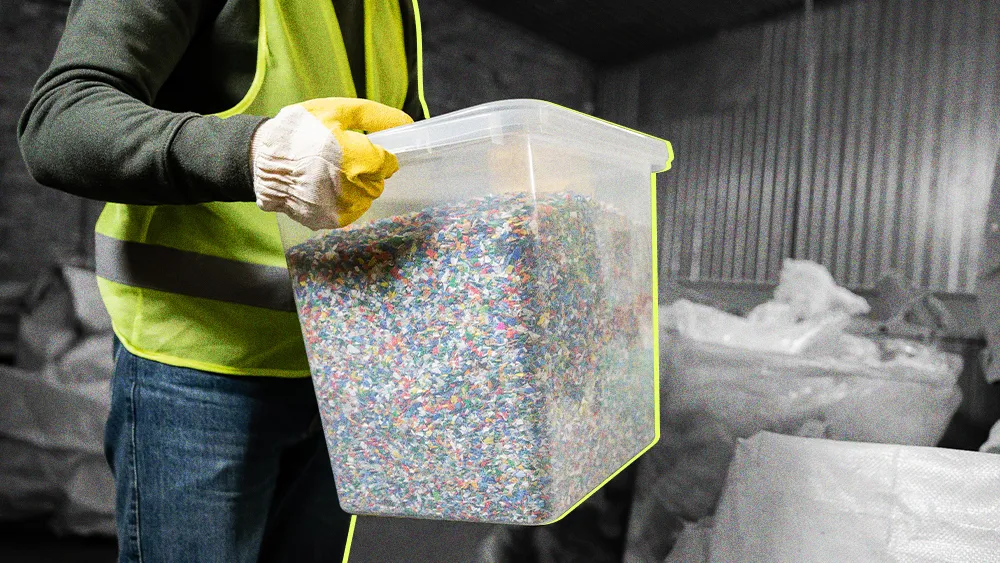
Global consulting firm McKinsey & Co. says the world is failing at plastic recycling because the problem is too broad. A new report on materials circularity argues that instead of a catch-all approach, the key is to zero in on specific, high-volume engineering polymers to create targeted and effective circular economies.
A logistical nightmare: The scale of the challenge is massive, with plastics production accounting for roughly 3% of global carbon emissions. According to the report, the industry has created “hundreds of plastic types, each differing in chemical composition, properties and applications.” That sheer variety has created distinct value chains, making any universal recycling solution a logistical nightmare.
Leaking like a sieve: The report makes its case by focusing on a single, unnamed engineering polymer, and the findings are stark. An estimated 70% of this plastic’s post-consumer scrap is never even collected. Of the 30% that is gathered, another 70% is still not properly recovered or recycled, creating a massive leaky pipeline.
X marks the spot: The report calls out consumer goods and automotive products in Europe and China as the biggest untapped sources for this scrap, presenting a clear target for improving collection. According to one analysis of the report, these engineering plastics could include materials like ABS, nylon, and polycarbonate commonly found in vehicles and electronics.
The shortest loop wins: The environmental logic for such a targeted approach is straightforward. The report emphasizes that “the shorter the circular loop, the better the carbon footprint of the system.” Getting there, McKinsey says, will require a new sourcing strategy to access “unconquered pockets of secondary materials.”
Reading Recap:
The wider materials view: McKinsey’s focus extends beyond plastics, with other reports in its series highlighting the unique hurdles facing glass recycling, where contamination and collection are major roadblocks. Meanwhile, on the economic front, the firm projects a potential supply deficit for recycled copper over the next decade, signaling a looming market squeeze for circular metals.